
This Financial Accounting Basics course introduces the fundamental concepts of accounting in a clear and structured way for beginners. It starts with an introduction to what accounting is and why it is important in business decision-making. You will also learn about GAAP (Generally Accepted Accounting Principles) and the FASB conceptual framework, which define how financial reporting should be done in a standardized way.
The course explains key accounting principles and assumptions that guide financial reporting. It then moves into the accounting equation (Assets = Liabilities + Equity) and how it forms the foundation of all financial statements.
You will also learn how to analyze business transactions and understand how they affect accounts. The course covers the structure of businesses such as sole proprietorships, partnerships, and corporations, helping you understand how accounting differs across them.
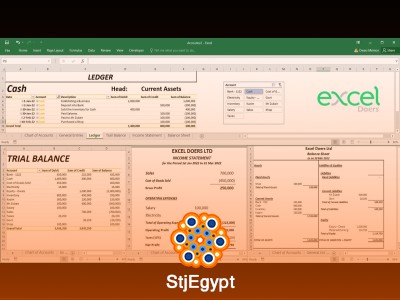
In addition, it introduces accounting tools like the general ledger, chart of accounts, and T accounts, which are essential for recording financial data. Finally, it shows how to prepare basic financial statements and understand debit and credit concepts in a simplified way.
By the end of this course, learners will have a strong foundation in financial accounting and be ready for more advanced topics.