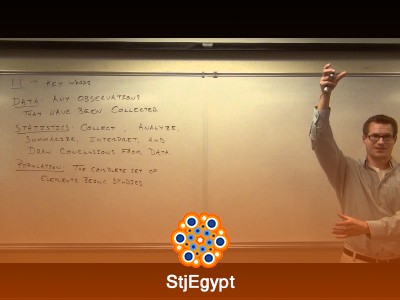

This course provides a clear introduction to elementary statistics, designed for beginners who want to understand how data is collected, organized, and analyzed. It builds essential skills for interpreting numerical information in research, business, and everyday life.
The course begins with key statistical definitions and terminology, helping learners understand basic concepts used throughout statistics. It then introduces different categories of data and levels of measurement, explaining how data is classified and interpreted.
Learners will explore sampling techniques, including how to create random samples that accurately represent a population. This is essential for ensuring valid and unbiased statistical results.
The course also covers frequency distributions and histograms, showing how data can be organized visually to identify patterns and trends.
In addition, it explains measures of central tendency, including mean, median, and mode, which help describe the center of a data set. It then introduces measures of variability, focusing on standard deviation as a key method for understanding data spread.
By the end of this course, learners will have a strong foundation in basic statistical methods and be able to analyze and interpret data effectively.