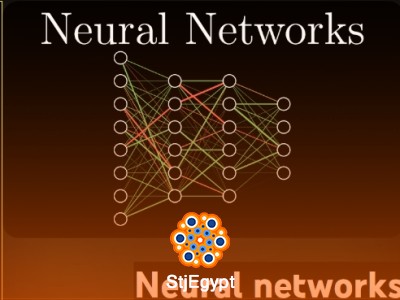

This course provides a clear and visual introduction to deep learning concepts, starting from neural networks and gradually progressing to modern architectures like transformers and large language models. It is designed to help learners understand both the intuition and the mathematics behind artificial intelligence systems.
The course begins by explaining what neural networks are and how they process information. It then introduces gradient descent, the core optimization method used to train neural networks by reducing prediction errors step by step.
A major focus of the course is backpropagation, explained in detail as the mechanism that allows neural networks to learn efficiently. Both conceptual and calculus-based explanations are provided to help learners understand how errors are propagated backward through the network.
The course then shifts toward modern AI systems, introducing large language models and explaining how models like GPT work. It covers transformer architecture, attention mechanisms, and how these systems process and generate language.
Additional topics include how AI models store facts, how attention shapes understanding, and a visual explanation of how AI generates images and videos. These sections connect theory with real-world AI applications.
Overall, this course is ideal for learners who want to understand both the fundamentals of deep learning and the inner workings of modern AI systems like transformers and LLMs.