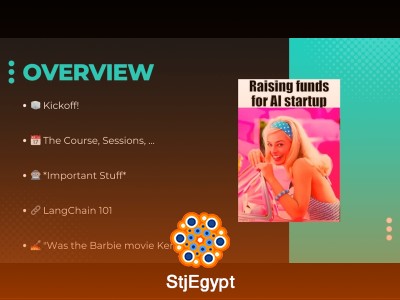

This advanced AI engineering course focuses on building Retrieval-Augmented Generation (RAG) systems using modern frameworks such as LangChain, LlamaIndex, Chainlit, FastAPI, and open-source large language models like Llama 2.
The course begins with an introduction to RAG architecture and demonstrates how to build a first AI-powered application using LangChain, Chainlit, and Hugging Face tools. Learners understand how external knowledge retrieval improves the accuracy and reliability of large language model responses.
A major focus is placed on LangChain agents, where learners explore autonomous AI workflows capable of reasoning, tool usage, and multi-step task execution. These agentic AI systems help developers build more dynamic and intelligent applications.
The course also introduces LlamaIndex data agents for constructing more robust retrieval pipelines and managing complex document indexing and querying workflows in enterprise AI systems.
Advanced sessions focus on building production-grade open-source RAG systems using Llama 2, FastAPI, and scalable backend architectures. Learners discover how to deploy AI systems capable of serving real-world applications efficiently.
Another important topic covered is LLMOps and observability tooling. The course explains how to monitor, evaluate, and optimize AI systems using platforms such as Weights & Biases (WandB) and LangSmith.
Learners also study scalable Llama 2 endpoints, evaluation frameworks like RAGAS, and benchmarking tools for measuring retrieval quality and language model performance.
By the end of the course, learners will understand RAG architecture, LangChain agents, LlamaIndex workflows, production AI deployment, L