
Introduction (
Artificial Intelligence has become one of the most transformative technologies in the modern world, reshaping how people communicate, learn, and work. Generative AI and Large Language Models (LLMs) are at the core of this transformation, enabling machines to understand human language and generate intelligent responses that feel natural and human-like.
This beginner-friendly course is designed to introduce learners to the fundamentals of Generative AI and LLMs in a simple and practical way. It explains how these systems work, why they matter, and how they are changing industries such as education, business, marketing, and technology.
By the end of this course, learners will have a solid foundation in AI concepts and a clear understanding of how to use these tools for creativity, productivity, and problem-solving in real-world scenarios.
What is Generative AI and LLMs?
Generative AI refers to a type of artificial intelligence capable of creating new content such as text, images, code, and more. Instead of simply analyzing data, it learns patterns from large datasets and generates new outputs based on those patterns.
Large Language Models (LLMs) are advanced AI systems trained on massive amounts of text data. These models understand human language, interpret meaning, and generate responses that mimic human communication.
LLMs can perform tasks such as answering questions, writing articles, summarizing text, and engaging in conversations, making them powerful tools for both personal and professional use.
Core Concepts Behind LLMs
To understand how LLMs work, it is important to explore the core concepts behind them. These models rely on Natural Language Processing (NLP), which allows machines to understand and interpret human language.
They process text by breaking it into tokens, analyzing relationships between words, and predicting the most likely next word or sentence. This process enables them to generate coherent and context-aware responses.
The course also explains key ideas such as embeddings, training data, and context windows, helping learners understand how AI systems “think” in a structured way.
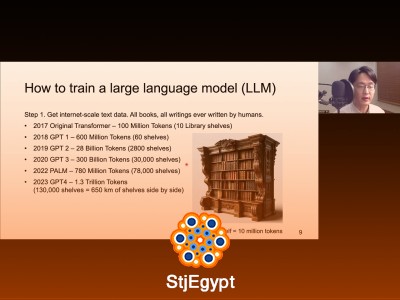
How Generative AI Systems Work Generative AI systems work through a combination of training, pattern recognition, and prediction. During training, the model is exposed to large datasets containing books, articles, and online content.
Once trained, the model uses statistical patterns to generate responses based on user input. It does not “think” like a human but instead predicts language in a highly advanced way.
The system also uses mechanisms like attention, which helps it focus on the most relevant parts of a sentence or conversation, ensuring accurate and meaningful outputs.
Why AI is a General-Purpose Technology (
Generative AI is considered a general-purpose technology because it can be applied across almost every industry. Just like electricity or the internet, it has the potential to transform how work is done globally.
Businesses use AI to improve customer service, automate tasks, and enhance decision-making processes. In education, it helps students learn faster and more efficiently. In creative industries, it supports content generation and idea development.
This wide range of applications makes AI one of the most important technologies of the modern era.
Practical Applications of Generative AI
Generative AI is widely used in everyday tasks and professional workflows. One of its most common uses is writing assistance, where it helps users create emails, articles, reports, and creative content.
It is also used for summarizing long documents, extracting key information, and improving reading efficiency. AI-powered chat systems allow users to interact with intelligent assistants that can answer questions and solve problems.
In addition, AI supports productivity by automating repetitive tasks and helping users generate ideas faster. It also enhances creativity by offering suggestions and alternative perspectives.
Strengths and Limitations of LLMs
Large Language Models have many strengths, including their ability to generate human-like text, understand complex topics, and assist in a wide range of tasks. They are highly useful for improving productivity and communication.
However, they also have limitations. They do not truly understand information like humans and may sometimes produce incorrect or outdated responses. Their output depends heavily on the data they were trained on.
Understanding both strengths and limitations is essential for using AI responsibly and effectively in real-world situations.
Who is this Course For?
This course is designed for beginners and non-technical learners who want to understand the basics of Generative AI and LLMs. No programming or technical background is required.
It is ideal for students, professionals, business owners, content creators, and anyone interested in modern technology and artificial intelligence.
Whether you want to improve your career, increase productivity, or simply understand how AI works, this course provides the perfect starting point.
Benefits of Learning Generative AI
Learning Generative AI provides valuable skills that are increasingly in demand in today’s job market. It helps individuals improve productivity, enhance creativity, and make better decisions using AI tools.
It also opens opportunities in various fields such as marketing, education, business analysis, and content creation. Understanding AI gives learners a competitive advantage in the digital economy.
By mastering these concepts, learners can confidently use AI tools in both personal and professional environments.