Organic Reaction Mechanisms Mastery: SN1, SN2, E1 & E2
عدد الدروس : 8 عدد ساعات الدورة : 01:56:05 شهادة معتمدة : نعم التسجيل في الدورة للحصول على شهادةللحصول على شهادة
- 1- التسجيل
- 2- مشاهدة الكورس كاملا
- 3- متابعة نسبة اكتمال الكورس تدريجيا
- 4- بعد الانتهاء تظهر الشهادة في الملف الشخصي الخاص بك
قائمة الدروس
عن الدورة
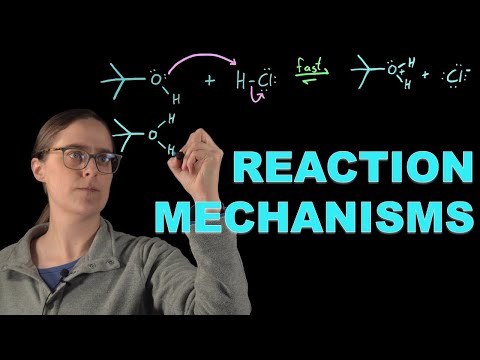
This advanced organic chemistry course focuses on reaction mechanisms, providing students with the tools to understand and predict chemical reactions confidently. The course begins with curved arrow notation, electron attacks, and the roles of nucleophiles and electrophiles, helping learners visualize how bonds break and form during reactions.
Next, it introduces strategies and tricks for learning reaction mechanisms, including four common reaction patterns that simplify complex organic transformations. The course explains carbocation stability and how to predict which intermediates are favored in a reaction, providing essential insight into reactivity trends.
Learners then explore the SN2 and SN1 reactions, detailing nucleophile/electrophile roles, leaving groups, stereochemistry, product ratios, and the differences between the two mechanisms. Similarly, E2 and E1 elimination reactions are covered, including Zaitsev's rule, stereochemistry, and competing pathways. The final module synthesizes all mechanisms, helping students confidently determine which mechanism applies to a given reaction without guessing.
With clear explanations, step-by-step diagrams, and practical problem-solving strategies, this course equips students to excel in organic chemistry, solve complex reaction mechanism problems, and develop a deep conceptual understanding of organic transformations.