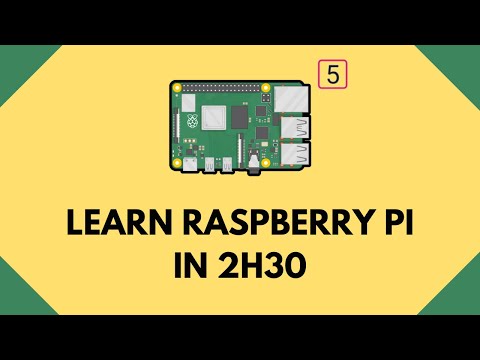
Raspberry Pi 5 Tutorial for Beginners Full Crash Course
عدد الدروس : 1 عدد ساعات الدورة : 02:42:46 شهادة معتمدة : نعم التسجيل في الدورة للحصول على شهادةللحصول على شهادة
- 1- التسجيل
- 2- مشاهدة الكورس كاملا
- 3- متابعة نسبة اكتمال الكورس تدريجيا
- 4- بعد الانتهاء تظهر الشهادة في الملف الشخصي الخاص بك
عن الدورة
H1: Raspberry Pi 5 Full Crash Course Complete Guide to Python, GPIO, Electronics, Flask, and IoT for Beginners
Introduction
The Raspberry Pi 5 is one of the most powerful single-board computers available for learning programming, electronics, robotics, and Internet of Things (IoT) development. With improved processing power and enhanced hardware capabilities, it has become a popular platform for students, hobbyists, developers, and engineers who want to build real-world technology projects without expensive equipment.
This Raspberry Pi 5 Full Crash Course is designed for complete beginners who want to learn Raspberry Pi from scratch. The course combines Python programming, electronics, GPIO programming, Linux, and web development into a practical learning experience that helps students understand both software and hardware integration.
Whether you want to build smart home devices, automate everyday tasks, create robotics projects, or explore embedded systems, this course provides the knowledge and practical experience needed to start confidently.
What Is Raspberry Pi 5 and Why Should You Learn It?
Understanding Raspberry Pi 5
Raspberry Pi 5 is a compact computer capable of running a complete operating system while supporting programming, networking, hardware control, and electronics development. Its GPIO (General Purpose Input Output) pins allow users to connect sensors, LEDs, motors, buttons, and many other electronic components.
Because of its flexibility, Raspberry Pi 5 is widely used in education, robotics, home automation, IoT, and software development projects.
Benefits of Learning Raspberry Pi 5
Learning Raspberry Pi 5 helps beginners develop practical skills in programming, electronics, Linux, and embedded systems. These skills are valuable for personal projects as well as careers in software engineering, automation, robotics, and computer engineering.
The course focuses on hands-on learning, making it easier to understand complex technical concepts through practical experience.
Setting Up Raspberry Pi 5
Installing Raspberry Pi OS
The course begins by explaining how to install Raspberry Pi OS and prepare the device for programming and development. Students learn the complete installation process and understand how the operating system supports Raspberry Pi applications.
A proper setup ensures learners are ready to complete all practical exercises throughout the course.
Headless Raspberry Pi Setup
One of the first advanced topics introduced is headless setup, which allows Raspberry Pi to be configured and accessed without connecting a monitor, keyboard, or mouse.
This technique is widely used in professional IoT and embedded systems projects where devices operate remotely.
Learning Electronics Fundamentals
Understanding Basic Electronic Components
Before building hardware projects, learners study the fundamentals of electronics, including breadboards, resistors, wiring techniques, and simple circuit construction.
These basic concepts help students understand how electronic components interact with Raspberry Pi hardware.
Breadboards and Resistor Color Codes
The course explains how breadboards simplify circuit building without soldering and teaches students how to identify resistor values using standard color codes.
Understanding these topics reduces wiring mistakes and builds confidence when creating electronic projects.
Programming Raspberry Pi with Python
Learning Python Programming
Python is the primary programming language used throughout the course because of its simplicity and powerful hardware libraries.
Students learn how Python communicates with Raspberry Pi hardware while writing programs that automate tasks and control electronic devices.
Controlling GPIO Pins
A major focus of the course is GPIO programming. Learners understand how GPIO pins function and how Python code can send and receive signals from connected electronic components.
This knowledge forms the foundation for building robotics, automation, and IoT applications.
Building Practical Raspberry Pi Projects
LED and Button Projects
Students build practical projects using LEDs and push buttons to understand digital input and output concepts.
These beginner-friendly exercises demonstrate how programming controls physical hardware while helping learners develop troubleshooting and circuit-building skills.
Interactive GPIO Challenges
The course includes hands-on GPIO challenges that encourage learners to apply what they have learned independently.
Completing these practical exercises strengthens programming confidence while improving understanding of electronics and hardware interaction.
Creating Web Applications with Flask
Introduction to Flask
Beyond hardware programming, the course introduces Flask, a lightweight Python web framework used to build web applications.
Students learn how Flask works and how it can be used to create browser-based interfaces for Raspberry Pi projects.
Controlling Raspberry Pi Through a Web Browser
One of the most exciting features covered in the course is remote GPIO control using a Flask web server.
Learners build a web application that allows Raspberry Pi hardware to be controlled directly from a browser, demonstrating how software, networking, and electronics work together in modern IoT systems.
Who Should Take This Raspberry Pi 5 Course?
This course is ideal for:
- Complete beginners learning Raspberry Pi.
- Students interested in electronics and programming.
- Python developers exploring hardware projects.
- Robotics and automation enthusiasts.
- IoT developers building smart devices.
- Engineering students learning embedded systems.
- Hobbyists creating DIY technology projects.
Because the course starts with the fundamentals, no previous experience with Raspberry Pi or electronics is required.
Career Benefits of Learning Raspberry Pi 5
Raspberry Pi skills are increasingly valuable in fields such as embedded systems, robotics, Internet of Things (IoT), automation, software development, and computer engineering. Combining Python programming, Linux, electronics, GPIO programming, and web development provides learners with a broad technical foundation that supports many modern technology careers.
Completing this course helps students build practical experience through real-world projects while preparing them for more advanced studies and professional opportunities in robotics, automation, embedded systems, smart devices, and IoT application devel