
This course on building Large Language Models (LLMs) from scratch provides a practical and theoretical introduction to the foundations of generative AI systems. It is designed for learners who want to understand how modern AI models such as GPT work internally and how they can be developed step by step.
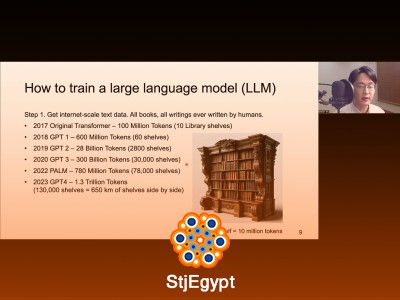
The course begins with an introduction to LLM development concepts and the overall process of creating language models from raw text data. Learners explore the basic principles behind neural language modeling and modern generative AI.
A major focus is placed on understanding transformers, the core architecture behind today’s large language models. The course explains attention mechanisms, sequence modeling, and how transformers process language efficiently.
Learners also study GPT-style architectures and discover how models such as GPT-3 generate coherent text using autoregressive prediction techniques.
The course compares pretraining and fine-tuning workflows, helping learners understand the difference between general-purpose language learning and task-specific adaptation.
Practical implementation is an important part of the training. Students learn how to build tokenizers from scratch in Python and understand tokenization strategies such as Byte Pair Encoding (BPE), which are essential for processing text efficiently in LLM systems.
Additional sections explain the stages involved in building an LLM, including dataset preparation, model architecture design, training workflows, and optimization techniques.
By the end of the course, learners will underst