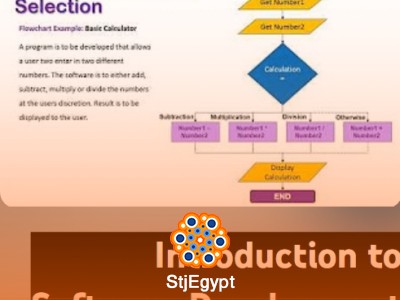

This Software Design and Development (SDD) course introduces the essential concepts used in planning, analyzing, and building software systems. It is designed for beginners who want to understand the foundations of software engineering and computer systems.
The course begins by explaining problem analysis in software development and how developers use structured approaches to design efficient systems. Learners explore the top-down approach, which breaks large problems into smaller manageable components for easier implementation.
Important system modeling techniques such as Context Diagrams and Data Flow Diagrams (DFDs) are covered in detail. These tools help visualize how data moves through a system and how different components interact with each other. The course also introduces structure charts and data dictionaries, which are commonly used in software documentation and planning.
In addition, learners study computer data representation including binary, decimal, and hexadecimal number systems. The course explains how values are converted between these systems and why binary representation is important in computing.
Data types and their role in programming are also discussed, helping learners understand how computers store and process information.
By the end of this course, students gain a strong understanding of software development fundamentals, system analysis techniques, and core computing concepts used in programming and software engineering.