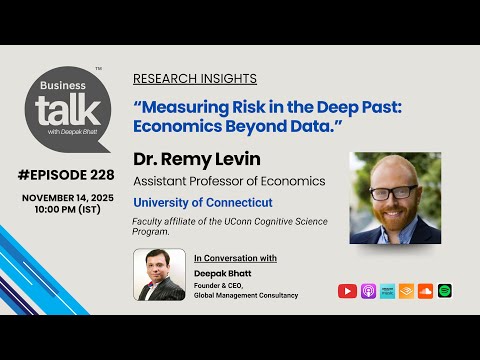
Economics Without Data: Understanding Historical Risk & Decision-Making
عدد الدروس : 1 عدد ساعات الدورة : 00:52:45 شهادة معتمدة : نعم التسجيل في الدورة للحصول على شهادةللحصول على شهادة
- 1- التسجيل
- 2- مشاهدة الكورس كاملا
- 3- متابعة نسبة اكتمال الكورس تدريجيا
- 4- بعد الانتهاء تظهر الشهادة في الملف الشخصي الخاص بك
قائمة الدروس
عن الدورة
Traditional economics often relies on numerical data to predict trends, but understanding historical risk provides critical insights into decision-making under uncertainty. This course examines how economic actors, from governments to businesses, respond to risk and uncertainty using qualitative analysis and lessons from past events.
Students will explore key historical case studies, such as financial crises, commodity shocks, and policy failures, to identify recurring patterns in economic behavior. Topics include risk perception, heuristics, cognitive biases, and the interplay between historical events and contemporary decisions.
By analyzing economic choices without relying solely on quantitative data, learners will gain a deeper understanding of why markets behave unpredictably, how to anticipate potential risks, and how to make informed decisions in complex, uncertain environments. The course blends economic theory, behavioral insights, and practical historical examples to show that data is not the only path to understanding economic dynamics.
By the end of this course, learners will be equipped to evaluate decisions under uncertainty, identify patterns in historical economic events, and apply these insights to